China High-Speed Train Guide for First-Time Visitors
China's high-speed rail is straightforward once four details are correct: the passenger information matches the passport, the station name is exact, the original passport is ready, and the traveler reaches the station with enough time for security and boarding.
The train is one step in a six-part station journey.
A short rail ride still needs a correct station, an original passport, security, a waiting gate, and an arrival plan.
Correct station
Match the complete English and Chinese station name.
Original passport
Carry the same valid document used for booking.
Security
Passengers and baggage pass through screening.
Waiting gate
Follow the train number, time, and live display.
Platform
Board only when the correct gate and train open.
Arrival plan
Keep the exit, local address, and first transfer ready.
60–90 min
Formscape buffer for a first visit to a large station
Add more time when assistance may be needed
Holiday peaks, document issues, children, reduced mobility, or substantial luggage
What you need before booking
China Railway uses real-name ticketing. The official 12306 English website accepts valid foreign passports covered by its rules, and third-party booking services also require accurate passenger information. Enter the name and passport number carefully and use the same passport for the journey.
Before paying, read the complete departure and arrival station names. Cities can have several large stations located far apart, and North, South, East, West, and Hongqiao are meaningful parts of the ticket rather than optional labels.
- Passenger name and passport number match the valid travel document.
- Travel date and train number match the intended day and direction.
- Departure and arrival stations work with the hotels and itinerary.
- Every traveler has the required entry permission for the itinerary; a train ticket is not immigration permission.
How early should you arrive?
There is no single official buffer that fits every Chinese station. China Railway advises passengers to reserve enough time for ticket or identity issues, the station entrance, security, the ticket gate, and the walk to the platform. Ticket checking stops before departure according to station announcements.
The buffers below are Formscape planning recommendations, not official railway cutoffs. The correct choice depends on the station, season, passenger needs, and whether any document issue must be resolved.
| Situation | Formscape planning buffer | Why |
|---|---|---|
| First visit to a large station | 60–90 minutes before departure | Time to find the entrance, clear security, locate the gate, and recover from a wrong drop-off |
| Repeat trip from a familiar station | 30–45 minutes before departure | Reasonable only when the ticket and passport are ready and no counter visit is expected |
| Holiday peak, passport issue, ticket change, children, reduced mobility, or heavy luggage | 90 minutes or more | Queues and staffed assistance can make the normal process much slower |
What happens at the station
Large stations can feel more like airport terminals than neighborhood rail stops. The normal sequence is entrance and identity check, baggage security, the correct waiting area, ticket-gate check, and then the platform when boarding opens.
Show the original passport
Use the valid passport entered for the booking. Keep the booking confirmation accessible, but do not assume a screenshot replaces the identity document.
Complete the security check
Passengers and belongings are subject to security screening. Review current restricted-item rules before packing rather than discovering a problem at the entrance.
Match the train to the waiting area
Use the train number and departure time on the displays. The platform may not be shown until closer to boarding.
Use a staffed lane when needed
If an automated passport reader does not accept the document, follow staff directions to a staffed identity or ticket gate instead of repeatedly trying a domestic-ID lane.
Keep the passport ready at arrival
The identity document used for the e-ticket may also be required to exit the destination station.
Visual identity check
Read the sign, not only the city in the booking app
Large hubs use bilingual signs, but the Chinese station name remains the most reliable detail to show a driver, hotel desk, or local map.
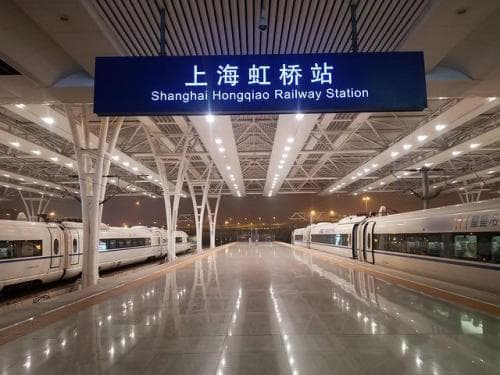 上海虹桥站
上海虹桥站Departure station
Match the full station name before entering
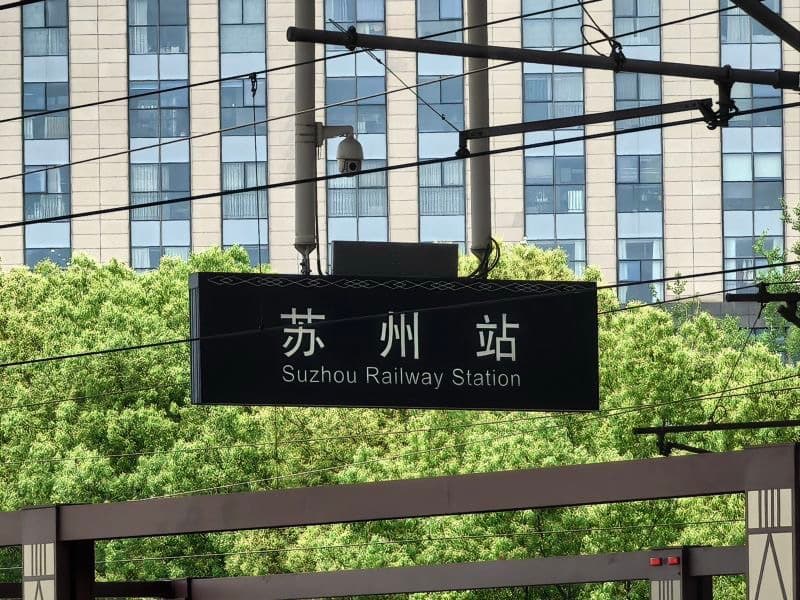 苏州站
苏州站Arrival station
Keep the destination station distinct from Suzhou North
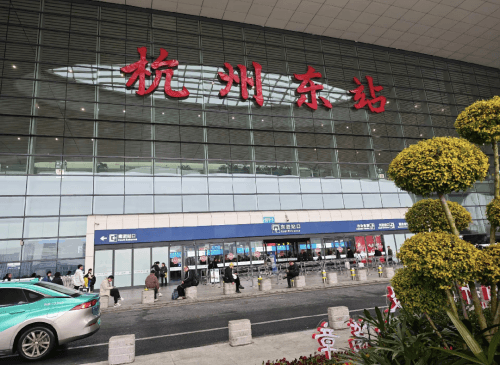 杭州东站
杭州东站Onward city context
Plan the station exit and final city transfer
Swipe to explore →
Do you need a paper ticket?
For an eligible e-ticket, the passenger uses the valid identity document associated with the booking to check in, board, and exit. China Railway says an itinerary sheet or reimbursement receipt cannot be used as the ticket.
Keep the order number, train number, seat information, and booking confirmation available offline. These details help with navigation and staff assistance even though the original passport remains the essential identity document.
The mistakes that cause the most trouble
Most first-time problems begin before the platform: a similar station name, a passport mismatch, an unrealistic city transfer, or an arrival plan with no security buffer. Check those items while a change is still possible.
- Going to Shanghai Hongqiao Airport when the ticket says Shanghai Hongqiao Railway Station.
- Reading only the city name and missing North, South, East, West, or another station qualifier.
- Leaving the original booking passport in the hotel.
- Assuming the short rail journey is the total door-to-door travel time.
- Planning a timed attraction immediately after arrival without an exit and city-transfer buffer.
How this guide is maintained
Written and maintained by Formscape Travel, a China-based travel-planning product from Formscape Lab. Product examples use the same local POI and trip data shown in the app.
Published 2026-07-18 · Updated 2026-07-18 · Last verified 2026-07-18
Sources and official links
China Railway 12306 FAQ
Official English guidance on real-name tickets, foreign passports, e-tickets, boarding time, security checks, and identity documents.
China Railway ticket service
Official ticket search and current service notices from China Railway.
Shanghai Government railway station guide
A concrete example of why complete station names and local connections must be checked.